
Some cats have a coat. Tuxedo cats have an outfit. The black-and-white bicolor comes with permanent formalwear, a resume that includes a literal war hero and a White House residency, and a fanbase convinced (without evidence, but with total confidence) that the suit comes with extra brains. Sixteen facts, all true, all formally dressed.
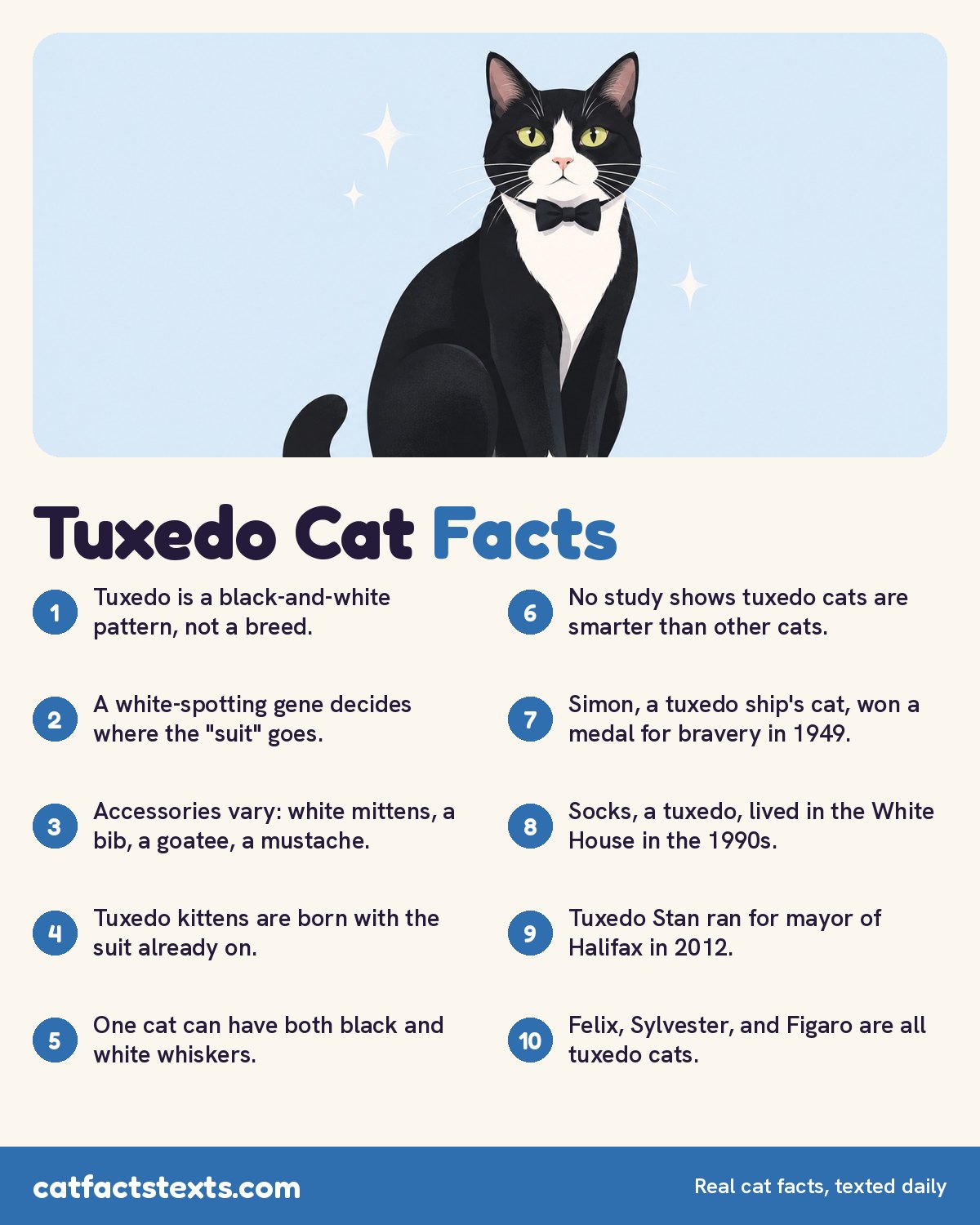
The suit is genetics
- Tuxedo is a pattern, not a breed. The black-and-white bicolor look shows up across many breeds and, most of all, in the great domestic shorthair population.
- The tailoring is done by migrating cells. In the embryo, pigment cells travel outward to color the coat. The white spotting gene slows the journey, and wherever the cells don't arrive stays white: usually the chest, paws, and belly, the last stops on the route. The tuxedo is literally an unfinished paint job worn as high fashion.
- The grades run from a modest white locket to a full "cow cat." Geneticists actually grade white spotting from 1 to 10; the classic tuxedo sits at the low-to-middle grades, and the mostly-white "moo suit" cats hold the high numbers.
- The accessories vary by cat: white mittens, a white bib, a chin goatee, or a mustache. Some tuxedos are one smudge away from a cartoon villain, and they know it.
- Tuxedos come in more than black. The same spotting gene over gray, orange, or tabby makes "tuxedo-adjacent" cats, but purists reserve the name for the black-and-white formal original.
- The smarts rumor is folklore. No study shows tuxedo cats are more intelligent than other cats. The suit simply makes competence look effortless, which is its entire function in human fashion too.
The most decorated dress code in cat history
- A tuxedo cat is a literal decorated war hero. Simon of HMS Amethyst survived a 1949 attack on his ship, kept the rat population down during the famous Yangtze siege, and remains the only cat ever awarded the Dickin Medal, the animal world's highest military honor.
- A tuxedo lived in the White House. Socks Clinton ruled the premises through the 1990s, got mountains of fan mail, and had a staffer help answer it.
- A tuxedo ran for mayor of Halifax. Tuxedo Stan's 2012 campaign ("because neutering is not just for cats") drew international press and a shout-out from Ellen DeGeneres. He lost with dignity and raised real money for feline health.
- Fiction's best-dressed are all tuxedos: Felix the Cat, Sylvester, Figaro from Pinocchio, and Mr. Mistoffelees, T.S. Eliot's "original conjuring cat," described in the poem as black from ears to tail with white feet.
- Shelters see them constantly, because the pattern is common and dominant-ish in the mixed population, which means the most formally dressed cat in the building is usually also the most affordable black-tie rental in town.
Living with the formalwear
- The white patches stay crisp for life. The pattern is fixed before birth; only black areas can "rust" slightly in strong sun, briefly downgrading the suit to charcoal.
- Tuxedo kittens are born dressed. Unlike calicos, whose colors develop, the tuxedo arrives with the suit already tailored, ready for the most important meeting of its life (dinner).
- Whiskers can come in both colors. A black-and-white cat with one black whisker in a sea of white ones is not rare, just excellent.
- Personality-wise, the suit writes checks the science won't cash. Owners describe tuxedos as bold and social; controlled research says coat and character are barely linked. Believe whichever your tuxedo demonstrates.
- The "kitten in a tuxedo" is the same pattern in miniature, and it is, objectively, measured by every available instrument, the best thing a Monday can produce.
Send facts. Wear whatever.
You don't need formalwear to text someone a daily cat fact; the facts arrive fully dressed. Enter a friend's number, choose the daily dose, and the internet's favorite harmless prank begins in seconds. One STOP reply ends it, though history shows most people surrender and start looking forward to it.
Complete the collection: 100 cat facts, orange, black, tabby, and calico. The set looks good on a shelf.