
Cats have lived alongside people for thousands of years, and they are still full of surprises. Their bodies are built for hunting, their senses outclass ours in almost every way, and their behavior (the kneading, the purring, the 3 a.m. sprint down the hallway) has a real explanation behind it. We have gathered the best, most reliable cat facts into one place so you can learn something new and share it.
Want a fresh fact in your pocket every day? Sign up for daily Cat Facts texts and we will send a hand-picked fact to any phone: yours, a friend's, or the whole group chat. No app needed, and you can reply STOP to cancel anytime.
Cats and history
The bond between cats and humans goes back a remarkably long way, and a few of those early chapters still shape how we see cats today.
- Cats were revered in ancient Egypt, where they were associated with the goddess Bastet and were sometimes mummified alongside their owners.
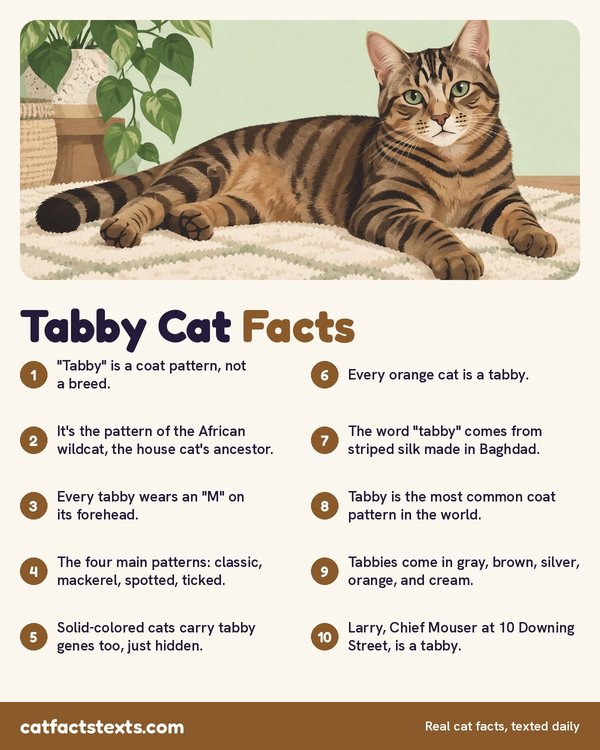
- The domestic cat descends from the African wildcat (Felis silvestris lybica), and people and cats have lived together for thousands of years.
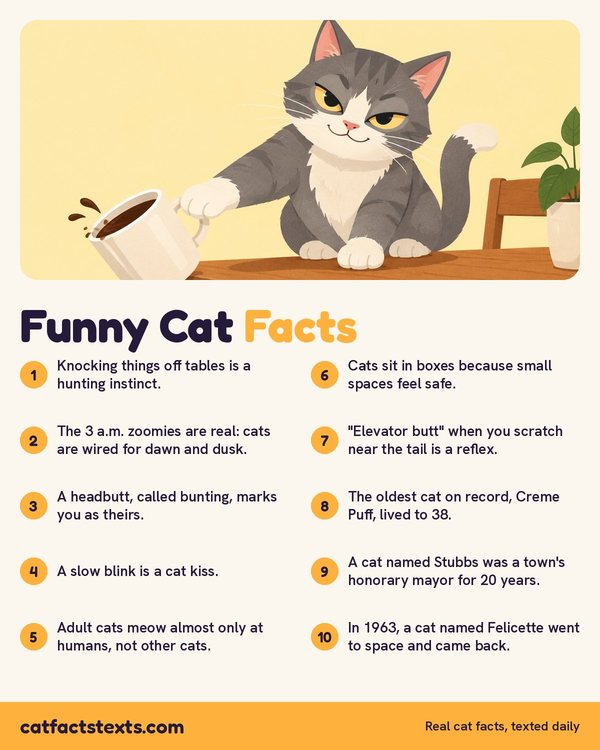
- A cat named Stubbs was the honorary mayor of Talkeetna, Alaska, for around 20 years, a quirk of small-town history rather than an official office.
- Isaac Newton is credited with inventing the cat flap so his cats could come and go without disturbing his work.
Built for the hunt: a cat's body
Almost everything about a cat's anatomy is tuned for stalking, pouncing, and landing on its feet. Here are some of the numbers and quirks behind that design.
- The Maine Coon is one of the largest domesticated cat breeds, with big males weighing well over 11 kg (around 25 lb).
- Adult cats have 30 teeth, while adult humans have 32.
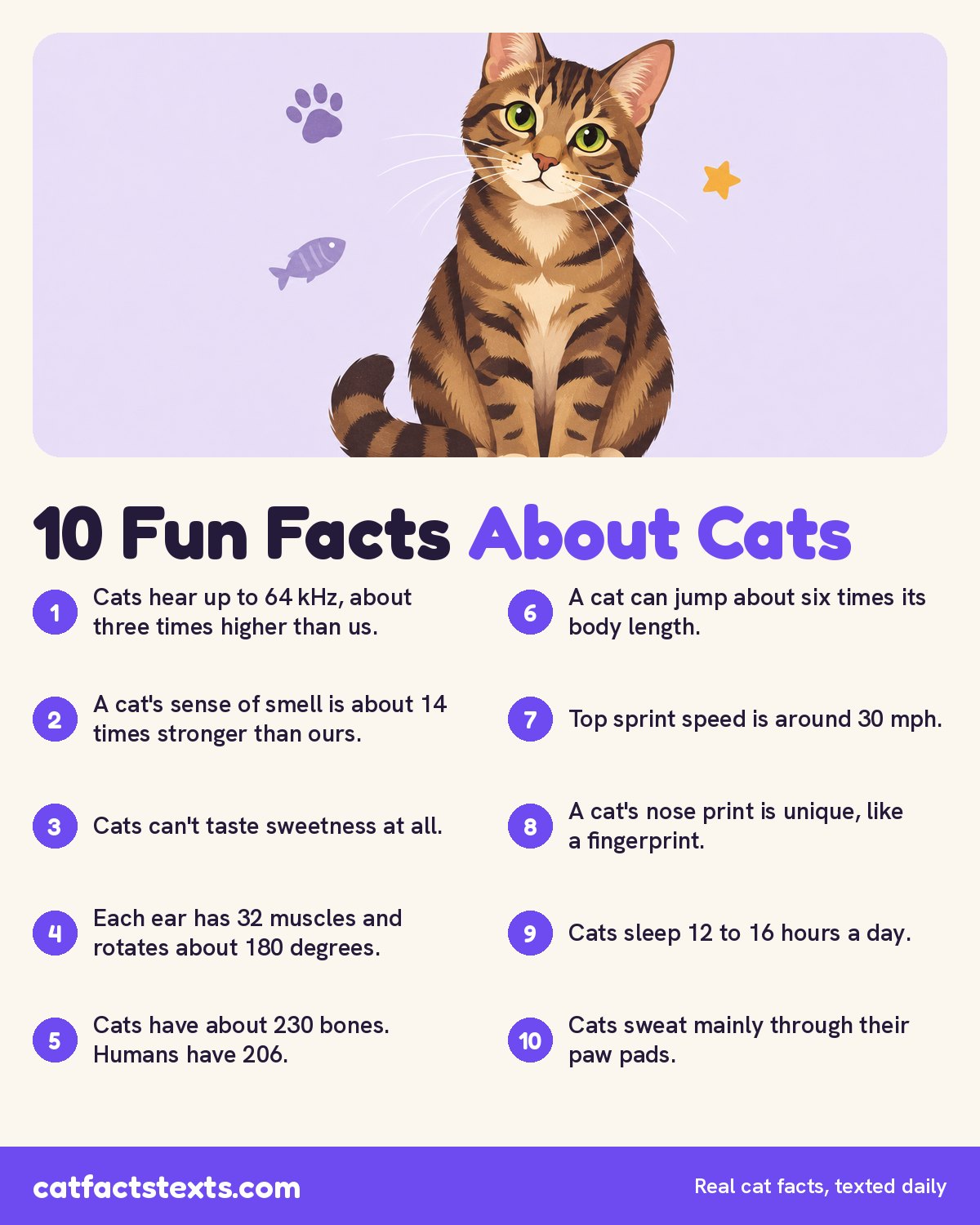
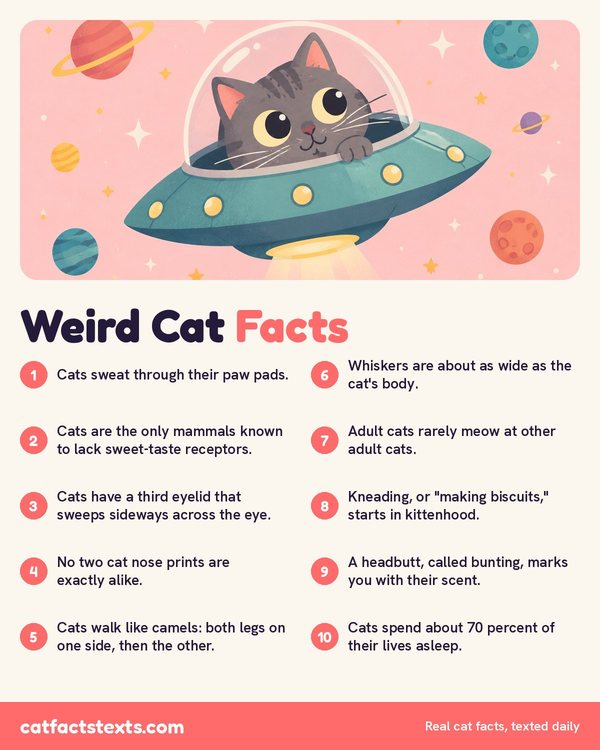
- A cat's nose print is unique, much like a human fingerprint.
- Cats have roughly 230 bones, more than the 206 in an adult human, and an unusually flexible spine that helps them twist mid-air.
- Most cats have no collarbone in the usual sense, which lets them squeeze through any gap their head fits through.
- A healthy cat's body temperature sits around 101 to 102.2 °F (38 to 39 °C), a little warmer than ours.
- Over short distances a domestic cat can sprint at roughly 30 mph (about 48 km/h).
Super-senses
If you have ever wondered how your cat hears the treat bag from another room or navigates a pitch-black hallway, this is why.
- A cat's field of view is about 200°, wider than a human's roughly 180°, giving them excellent peripheral awareness.
- Cats see very well in low light. A reflective layer behind the retina called the tapetum lucidum bounces light back through the eye, which is also why their eyes seem to glow at night.
- A cat's sense of smell is far keener than ours, which is why scent matters so much in how they read the world.
- Each ear is controlled by many muscles, letting a cat swivel its ears independently to pinpoint where a sound is coming from.
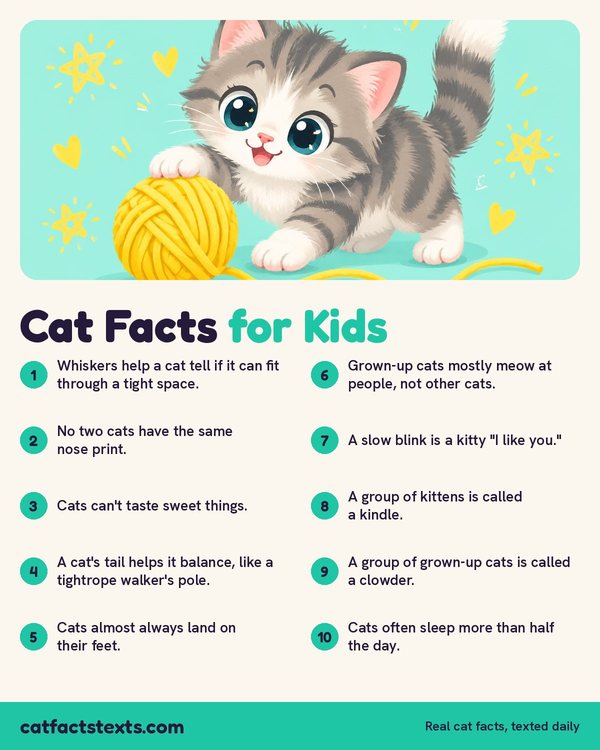
- Whiskers are precision sensors: roughly as wide as the cat's body, they help judge whether a gap is wide enough to fit through.
Sleep, purring, and other cat behavior
So much of what cats do looks mysterious until you know the reason. A few favorites.
- Cats sleep a lot, commonly 12 to 16 hours a day, conserving energy between bursts of activity, a habit inherited from their hunting ancestors.
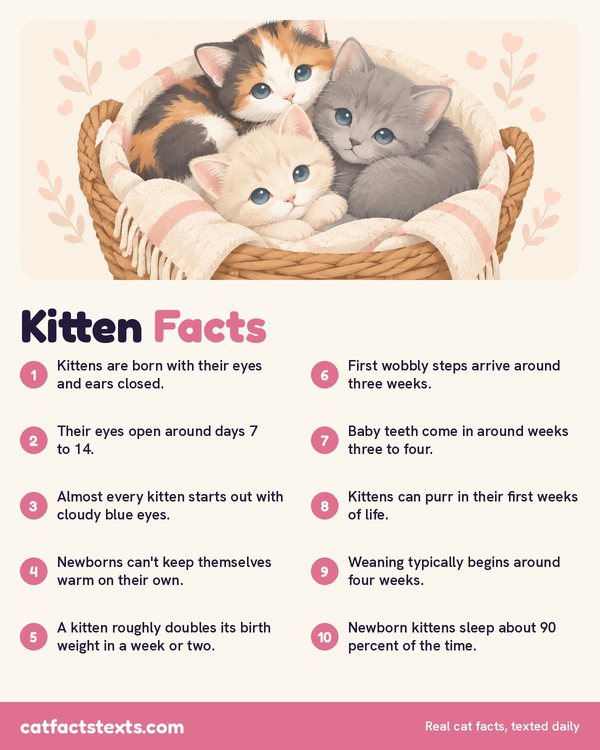
- Kneading, that rhythmic pressing with the paws, starts in kittenhood during nursing and often signals comfort and contentment in adult cats.
- Cats sweat through their paw pads, and scent glands there help them mark territory as they walk and knead.
- Purring usually means contentment, but cats also purr when stressed, injured, or healing, which suggests it can be self-soothing.
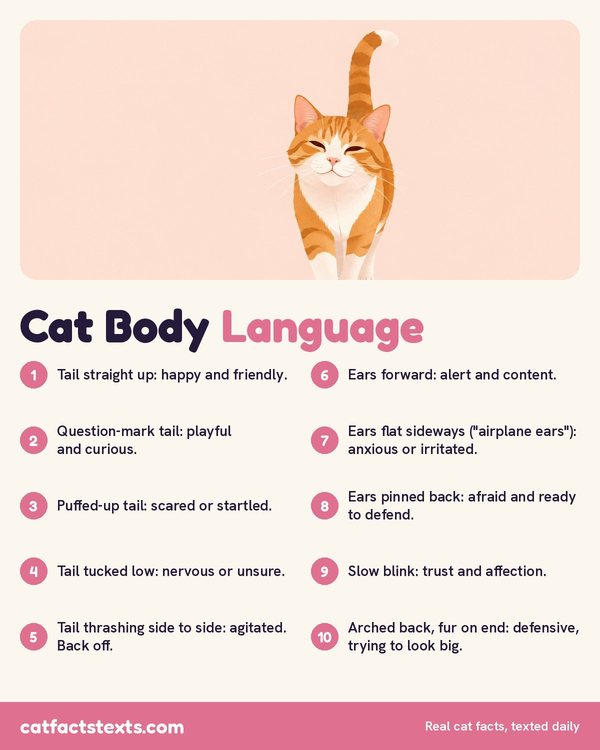
- The "slow blink", a cat slowly closing and opening its eyes at you, is widely read as a friendly, relaxed gesture.
- A group of cats is called a clowder, and a group of kittens is a kindle.
A quick cat-facts cheat sheet
Short on time? Here is a rapid-fire list of crowd-pleasing facts, perfect for settling a debate or kicking off a text thread.
- Many white cats with blue eyes are born deaf, a trait linked to their coat genetics.
- Cats can be trained (including, with patience, to use a toilet) because they are quick to learn routines.
- A cat's typical resting heart rate is much faster than a human's, often well over 100 beats per minute.
- Cats are obligate carnivores, meaning they need nutrients found in animal-based food to stay healthy.
- Most adult cats are lactose intolerant, so the classic saucer of milk can actually upset their stomach.
- With good care, many house cats live into their late teens, and some reach 20 years or more.
- Cats often "chatter" at birds through a window, a curious, instinctive reaction to prey they cannot reach.
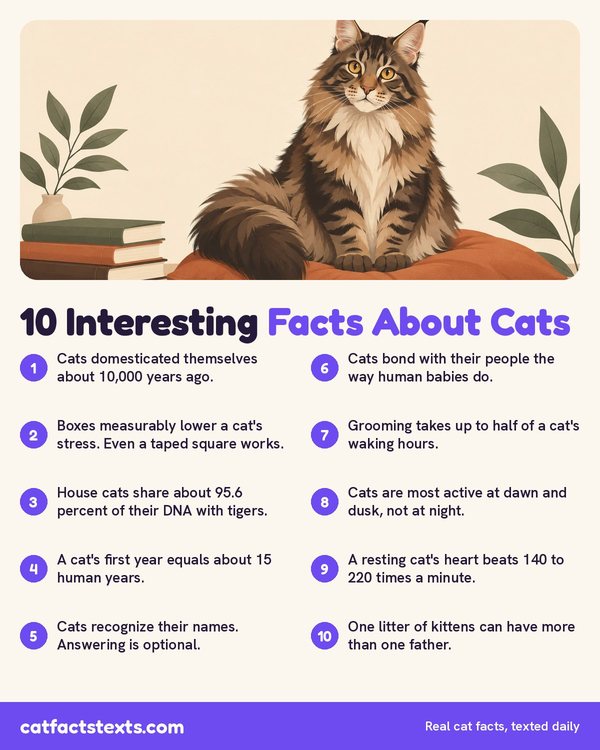
Cat facts infographics
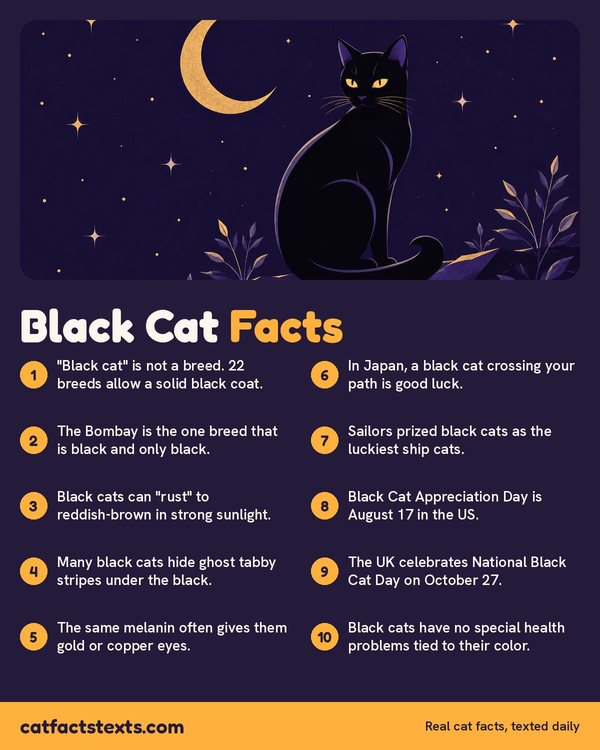
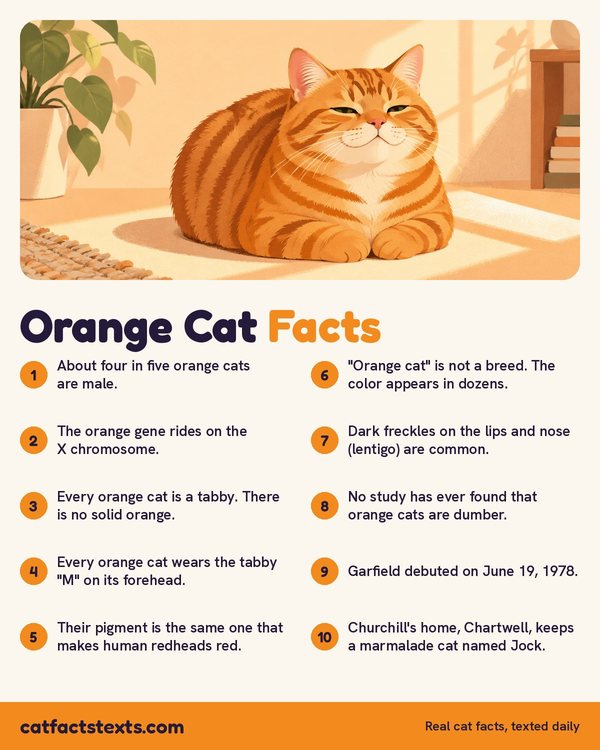
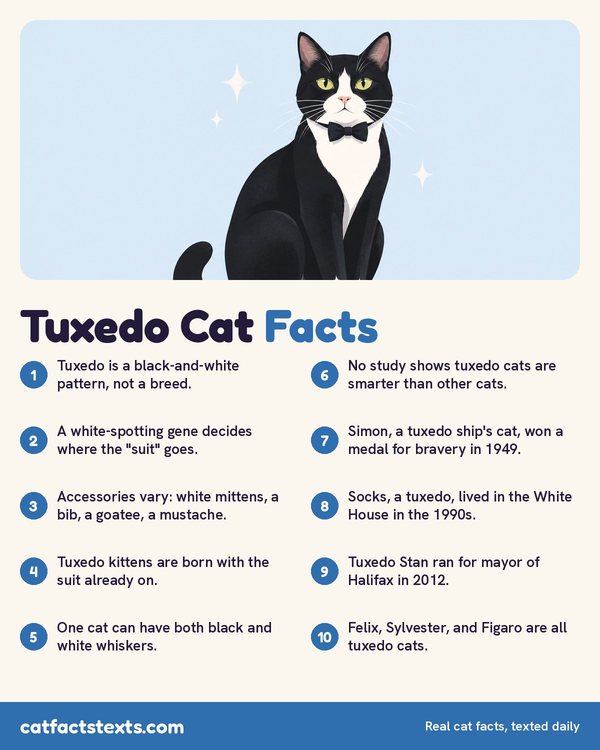
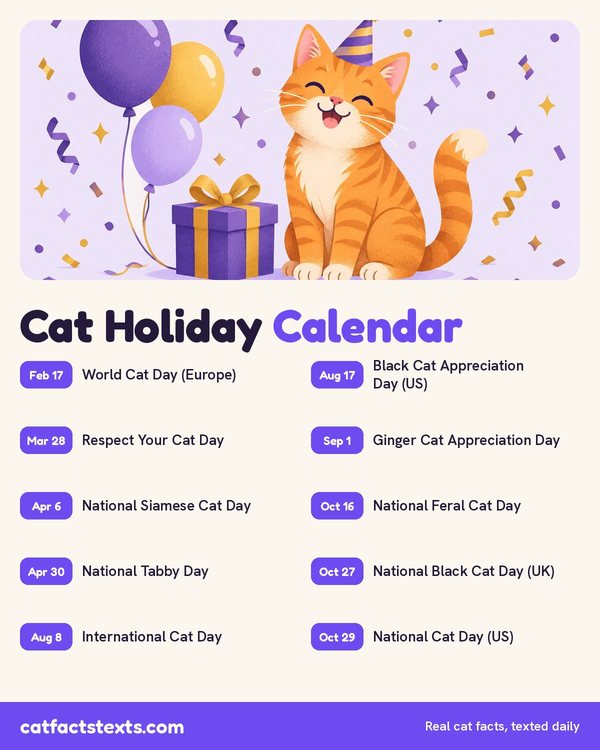
Prefer your facts in picture form? Each of these is free to save and share. Tap one to read the full article behind it.

Keep the facts coming
This page is just a sample. Hungry for the whole buffet? Start with our master list of 100 cat facts that are actually true, then branch into orange cat facts, black cat facts, and the story of how the Cat Facts prank began.
Still, the best way to enjoy cat facts is one at a time, arriving as a surprise text in the middle of an ordinary day. Sign a friend up as a harmless prank, or treat yourself to a daily dose of feline trivia.