
Bringing home a kitten is equal parts joy and panic. They're tiny, they're loud, and they grow up at a pace that will make your head spin. The good news is that kitten development follows a remarkably predictable schedule, so once you know the milestones you'll feel a lot less like you're winging it. Here are eighteen genuinely useful facts about those first nine weeks, organized roughly by age.
The first two weeks: tiny, blind, and totally dependent
Newborn kittens are about as helpless as a mammal gets. They can't see, can't hear, and can't regulate their own body temperature. Mom does almost everything.
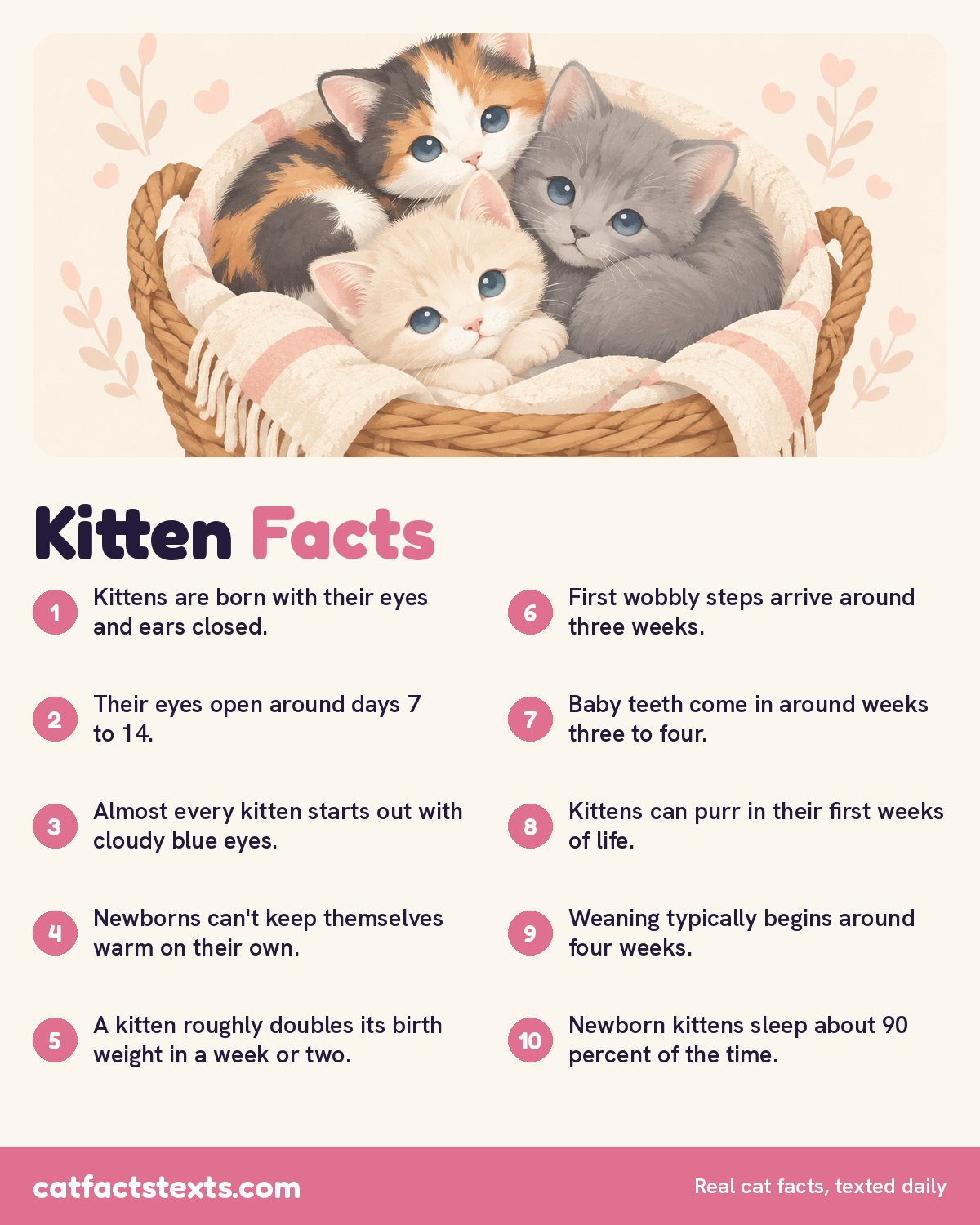
- Kittens are born with their eyes closed. Those eyes stay shut for the first week or two while the eyes finish developing. Resist the urge to peek and pry them open.
- Their ears are folded shut, too. Hearing comes online gradually over the first couple of weeks as the ear canals open.
- Newborns can't keep themselves warm. They rely on mom and littermates for heat, which is why you'll see a litter piled into one cozy heap. A chilled kitten is a genuine emergency.
- A newborn kitten roughly doubles its birth weight in the first week or two. Steady weight gain is the single best sign a young kitten is thriving, which is why breeders and rescuers weigh them daily.
- They're born with a sense of smell. Scent is how a blind, deaf newborn finds the warmth of mom and a spot to nurse.
Weeks two to four: the world comes into focus
This stretch is when a kitten transforms from a wobbly little potato into something recognizably cat-shaped and curious.
- Kitten eyes open somewhere around days 7 to 14. When they first open, almost every kitten has the same cloudy blue eyes.
- That blue is temporary. The adult eye color usually settles in over the following weeks and months, so a kitten that starts out blue-eyed may end up green, gold, or copper.
- First wobbly steps arrive around three weeks. Before that they scoot and paddle. Once they're upright, the zoomies are not far behind.
- Baby teeth start coming in around weeks three to four. A kitten's full set of deciduous teeth, often called milk teeth, finishes arriving a bit later. These eventually fall out and get replaced by adult teeth.
- They begin learning to use a litter box around three to four weeks. Kittens instinctively take to loose, diggable litter. Offer a low, shallow tray they can climb into.
Weeks four to six: weaning and play
Now things get fun, and messy. This is the social and developmental window that shapes the cat your kitten becomes.
- Weaning typically begins around four weeks. Kittens start sampling solid food while still nursing, and the transition usually wraps up by around eight weeks.
- The early weeks are a critical socialization window. Gentle handling and exposure to everyday sights and sounds during this period helps kittens grow into confident, people-friendly adults.
- Play is practice for hunting. Pouncing on a sibling's tail or ambushing a toy is how kittens rehearse the stalk-and-pounce skills built into every cat.
- Purring shows up very early. Kittens can purr in their first weeks of life, and it's thought to help mom locate them and signal that all is well.
Weeks six to nine: almost ready for the big move
By now your kitten looks like a miniature cat with an oversized personality. A few important things happen before they're ready to leave the litter.
- First vaccinations usually start around six to eight weeks. Your vet will set up a series of boosters over the following weeks, so the first visit is the start of a schedule, not a one-and-done.
- Most kittens are fully weaned and eating solid food by around eight weeks. Kitten-specific food matters here, because growing bodies need more calories and protein than adult formulas provide.
- Reputable breeders and rescues generally don't rehome kittens before eight to twelve weeks. Those extra weeks with mom and littermates teach crucial social skills, including bite inhibition and how to be a cat.
- A first wellness vet visit is a must. Whenever your kitten comes home, an early checkup screens for parasites, confirms a healthy weight, and gets you on a vaccination and deworming plan.
A quick new-owner checklist
Before kitten day arrives, have these ready:
- A shallow litter box with unscented, fine-grain litter
- Kitten-formula food (wet, dry, or both)
- Shallow water and food dishes
- A warm, draft-free bed in a quiet room
- A few safe toys for all that pouncing practice
- The name and number of a local vet
Get those basics squared away and you'll be in great shape. The rest is mostly snuggles, the occasional 3 a.m. zoomie, and watching a tiny creature figure out the world one wobbly pounce at a time. For more feline trivia and care tips, browse more cat facts on the blog.
Know a friend who just adopted a kitten and could use a daily dose of feline wisdom? Start sending cat facts to their phone and give them a little something to smile about every morning. They can reply STOP to cancel anytime, though we suspect they won't want to.